
Checklist For Revision Nose Surgery: What You Need To Know Before Making The First Call
Having the best revision rhinoplasty surgeon is difficult. Unlike your first rhinoplasty, knowing the tangled and often unpredictable nature of revision rhinoplasty patients is important. The patient’s anatomy, the nasal framework, facial structure, the support andirection of the cartilage, scar tissue, skin response, and sometimes the airway in the nose may have irreversibly changed as a result of prior surgery or prior rhinoplasty.
Unsatisfactory results, malposition with a deviated or asymmetric nose, insufficient tip or bridge correction, or the postoperative development of disturbing, bothersome symptoms may all cause a patient to seek revision rhinoplasty.
Often, revision rhinoplasty candidates have breathing problems or breathing difficulties caused by previous surgery, even if the postoperative result is aesthetically pleasing to the patient.
The correct surgeon selection is important, but not as simple as selecting the surgeon with the best after-before photo selection, biggest celebrity status, online ratings, or real patient reviews. The more relevant question is if the surgeon has relevant experience not only with rhinoplasty, but also secondary rhinoplasty, understands altered nasal anatomy, and can accurately assess what can be done safely and without overly increasing the risk of complications.
What Is Revision Rhinoplasty?
Revision rhinoplasty refers to the surgery of a nose that has previously undergone one or more primary rhinoplasty surgeries. Secondary rhinoplasty, revision nose surgery, or revision rhinoplasty describes the same procedure.
A patient may consider revision surgery due to the following:
- concerns of persistent asymmetry
- an irregular, crooked nose, or deviated nose
- an over- or under-corrected nasal bridge
- tip problems
- contour irregularities on the dorsal or lateral walls of the nose
- inability to adequately breathe through the nose
- obstruction of nasal airflow
- structural weakness
- dissatisfaction with the result of the original surgery
Revision rhinoplasty is not a simple repeat of the initial rhinoplasty. Previous surgery may have altered the nasal structure and the relationship between the external nose and the structures of the nose and nasal airway.
This is the reason revision surgery is done with great caution.
Why Is Revision Rhinoplasty More Complex Than Primary Rhinoplasty?
Revision surgery is more complex than primary rhinoplasty. Revision surgery is used to operate on previously healed and operated tissues, which makes these surgical procedures technically demanding.
Scar tissue and altered nasal anatomy are grafts made at a prior surgery. Previous cartilage grafting can also affect the structures available for another operation.
Surgical techniques used during the primary rhinoplasty may have altered the original anatomy. With revision rhinoplasty, the surgeon may not be able to determine the inner nasal framework of the nose until the surgery is performed.
Reduced Structural Support
Some patients may have insufficient cartilage or bone as a result of the first surgery. Other patients may have a weakened nasal framework as a result of healing, trauma, prior grafts, or numerous prior surgeries.
For these patients, revision surgery is more like reconstruction, than reshaping, and may involve principles used in reconstructive surgery.
Addressing Breathing Issues
Not all primary rhinoplasty is equal. Some have only cosmetic concerns and benefit from surgery to meet those goals. Many others develop or continue to have breathing problems, a blocked nose, a deviated septum, weakness of a nasal sidewall or valve collapse, among other medical issues.
A thorough revision rhinoplasty procedure must consider breathing issues in addition to appearance. Neglecting the airway can still leave an important part of the original problem unsolved.
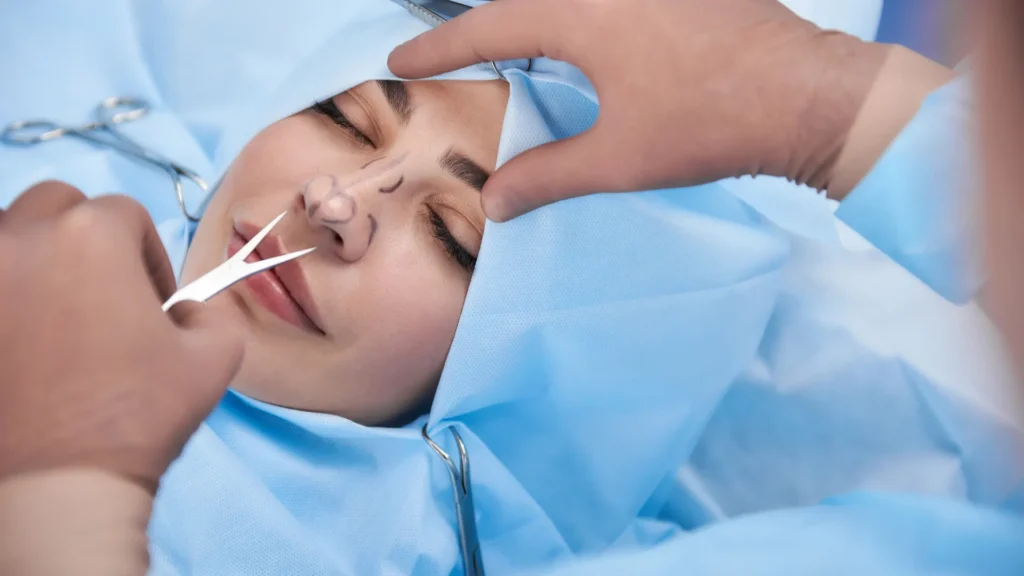
How to Find the Best Revision Rhinoplasty Surgeon
Cosmetic goals taken into account, what defines the best revision rhinoplasty surgeon?
No single surgeon can rightfully be called best for every situation.
The goal will be to hope for a surgeon whose training and experience fits your problem and how they perform surgery, rather than simply compare rhinoplasty providers, doctors, rankings, or highly rated profiles.
In any rhinoplasty surgery, the surgeon’s experience with revisions is critical, regardless of the quality of their primary surgeries. For a revision rhinoplasty specialist, ask about the number of secondary surgeries they perform, and the types of cases they perform, including complex or ethnic rhinoplasty cases, as well as their history with multiply revised cases. How often do their revision cases require structural reconstruction?
The quality of a surgeon’s practice, not the number of cases, is the metric that matters most. The surgeon must be familiar with the issues created by prior surgery, and revision rhinoplasty requires expert assessment of both cosmetic and functional problems.
Importance of Experience with Reconstruction
A primary (or first) nose job involves reshaping and rearranging the existing cartilage and nasal bones, and may use partial tissues. On the other hand, revision surgery may involve strengthening and/or adding structures that were weakened or removed some time ago.
Thus, appreciation of and experience with the following procedures will be an asset for surgeons:
- Cartilage structure and composition, constructing various types of cartilage grafts
- Cartilage grafting
- Reconstruction of various elements of the nose
- Reconstruction of the nasal bridge
- Reconstructing structural framework of the nose
- Reconstruction of the airway
- Management of scar tissue and other adverse tissue reactions
A patient who has structural collapse will require an entirely different approach to the patient who simply desires a small refinement of his/her nasal contour.
Importance of Form and Function
A nose job can look better cosmetically, while still producing nasal obstruction.
Conversely, a technically correct functional nose job may still be aesthetic cosmetically.
Therefore, a thorough consultation, sometimes supported by computer imaging, should include a functional assessment and a cosmetic assessment. The surgeon should inquire about previous surgeries and trauma, as well as the patient’s goals and expectations from the surgery, including natural-looking results, facial aesthetics and aesthetic balance.
In the event that it becomes necessary, provision for functional correction should be part of the revision plan.
Revision Rhinoplasty Specialist vs General Rhinoplasty Surgeon
In the course of one’s research, one will come across the terms revision rhinoplasty specialist, facial plastic surgery, facial plastic surgeons, plastic surgery, plastic surgeons, facial plastics, otolaryngology-head and neck surgery, and rhinoplasty specialist.
The title in and of itself is not indicative of the surgeon’s qualification for revision rhinoplasty.
Professional qualifications, board certifications and relevant professional memberships are a must, but patients must also determine what the surgeon does in reality, and not just in theory. Depending on the country, this may include credentials such as the American Board of Plastic Surgery or professional organisations such as The Rhinoplasty Society.
In such a case, patients should look for relevant experience with altered nasal anatomy, scar tissue, grafting, functional and cosmetic problems, and cases similar to theirs.
Some countries show marketing terms such as double board-certified facial plastic surgeon or board certified facial plastic surgeon to their patients. Although certification gives insight into a physician’s training, no credential guarantees a certain outcome.
The most important aspect is the surgeon’s background and their specific surgical experience for the revision.
How to assess revision rhinoplasty before-and-after photographs
Before-and-after photographs can be useful, but only to a point.
You should not make your decision based on if you personally like the final nose or whether the photos simply appear to show natural-looking results. The photographs should help you understand what kinds of final results the surgeon has achieved in comparable revision cases.
Find Comparable Cases
Relevant cases include revision surgery for:
- crooked noses
- tip asymmetry
- over-narrow noses
- over-resected nasal bridges
- an over-resected nasal bridge that has collapsed
- excessively rotated tips
- inadequate tip support
- over-resected, irregular nasal bridges
- breathing-related structural-tip problems
A large number of attractive primary rhinoplasty before-and-after photographs does not indicate the same level of experience in complex revision rhinoplasty.
Check Multiple Angles
Photographs taken from the front and side can obscure important information.
If you can, examine frontal, side, oblique and base views. These views can show if the tip and nostrils are symmetrical, and the various structures of the nose are aligned.
It is important to know the time the postoperative photograph was taken because the nose heals in stages and early photos should not automatically be treated as final results.
Nose Tip Revision Rhinoplasty
The nasal tip is one area that requires correction in revision rhinoplasty.
A revision rhinoplasty of the tip may be recommended for issues such as asymmetry, inadequate tip projection, rotation, tip excess, tip pinching, tip vulnerability, or irregularities caused by scar tissue.
Sutures and Nasal Tip Support
Tip revision surgery can be more difficult than surgery to reconstruct the tip of the nose, as the cartilage has already been manipulated, either through cutting, suture placement, sutures, or repositioning.
The surgeon must evaluate the remaining support structure of the tip to determine the extent of revision surgery required.
In some cases, revision of the nasal tip may require the addition of support to strengthen the nasal tip, rather than the removal of tissue from the nose.
Cartilage Grafting in Revision Rhinoplasty
The use of cartilage grafts in revision rhinoplasty is justified. In revision surgeries, the original cartilage of the nose may no longer provide the required material or support.
Grafts can be used to strengthen certain structures, restore projection, correct asymmetry, or to reconstruct the framework of the nose.
The extent of the required support depends on the degree of pre-existing damage and the existing support.
The Nasal Septicum
In some cases, the septal cartilage of the septum can be used as a source of graft. However, a previous rhinoplasty or septoplasty may have used or removed this cartilage.
Cartilage of the Ear
Ear cartilage may be used, in certain situations, to correct defects. Ear cartilage may be used, in certain situations, to correct defects.
Rib Cartilage Grafting
Grafting of Cartilage from the Rib
Complex reconstruction often requires a significant volume of cartilage. Therefore, the combination of terms such as Revision Rhinoplasty and Rib Cartilage as well as Rib Cartilage Rhinoplasty Revision are common in Internet searches relating to difficult Secondary Rhinoplasty surgeries.
Although rib cartilage grafting can provide a lot of material for reconstruction, it is only used where it is needed in each case of revision.
When evaluating the remaining nasal structures and assessing the support required, the best course of action should be outlined, including whether cartilage from the ear or rib may be considered.
Post operative consultations should explain the reasoning for both the proposed surgery and the proposed source of rib graft.

Is this an open or closed revision rhinoplasty?
In certain cases of revision rhinoplasty, both open and closed technique approaches — open rhinoplasty and closed rhinoplasty — can be considered.
The technique selected should correspond to the required correction and not to the ideal, superior (open or closed) technique.
The open technique allows greater exposure of the nasal structures and is generally used in extensive reconstruction. For example, closed technique may be suitable in certain limited cases.
The previous surgery, scar tissue, types of grafting, skin quality, and extent of the nasal deformity will affect the surgical technique.
The different surgical techniques described should be researched to understand why a particular method is recommended for a specific nose, rather than selecting the surgery based solely on the name of the technique.
Functional revision rhinoplasty
Nasal Function and Functional Correction
Functional rather than aesthetics concerns lead to many revision rhinoplasty procedures.
After the initial surgery, patients experience breathing difficulties and/or nasal obstruction.
Potential structural problems may include a deviated septum, an obstructed airway, scar-related narrowing, inadequate support for the sidewall of the nose, and nasal valve collapse.
In such cases, the planning of the revision may include cosmetic reshaping of the nose and restoration of nasal airway function.
Before surgery, the surgeon must be informed of any breathing difficulties. A patient should not expect breathing to improve from the surgical correction of a cosmetic problem unless breathing difficulties are addressed both clinically and in the surgical plan.
When Should You Consider Revision Rhinoplasty?
Being disappointed immediately after rhinoplasty surgery does not justify re-doing surgery.
The nose continues to heal, and swelling can alter symmetry and definition of the nose and nasal tip.
If no resolution is reached after an appropriate healing period and a thorough evaluation, then revision rhinoplasty surgery should be considered.
Some of the concerns that may lead a patient to have revision surgery include:
- paradoxical Cosmetic concerns
- new Types of asymmetry
- obvious Structural problems
- nasal obstruction with or without breathing problems
- an area of the nose that is weak or has collapsed
- Dissatisfaction with a previous surgical outcome that has stabilized
However, revision surgery is not indicated in patients who are still healing, or in cases where the patient’s cosmetic desires cannot be met.
How Long Should You Wait Before Revision Rhinoplasty?
The waiting period after primary rhinoplasty will differ with each patient.
Factors involved include the nature of the primary rhinoplasty surgery, the type of tissues, degree of residual swelling, immature scar tissue, and the nature of the problem.
If there are no significant functional problems present, then the surgeon should assess whether the nose has healed sufficiently to warrant revision surgery.
In such cases, surgery should not be done to correct an early unsatisfactory outcome.
How Is Revision Rhinoplasty Recovery Different from Traditional Rhinoplasty Recovery?
Swelling and Bruising During the Recovery Process
While most of the features of revision rhinoplasty recovery are the same as traditional rhinoplasty recovery, there are some differences. As with rhinoplasty recovery, there is bruising and swelling, swelling and bruising, as well as lingering congestion and activity restrictions.
However, the length of your recovery will depend on how extensive your surgery was.
A simple correction will have a much less extended recovery period than a complicated multi-graft reconstruction.
It is important for revision patients to receive instructions on post-surgical cares, limitations on activities and restrictions on medications and when they need to come back for a follow-up.
Revision patients also need to be informed that it is normal for the appearance to still change during the recovery as the swelling subsides and the final results develop.
For how safe revision rhinoplasty actually is…
Whereas with any surgery there is always a risk of bleeding, infection, scarring, asymmetry, breathing issues, changes in sensation, delayed healing, further complications or the need for more surgery, revision rhinoplasty is still surgery.
Previous scar tissue and trauma to the structures of the nose will effect and increase the complexity of the surgery.
Due to these factors, revision rhinoplasty surgery will never be completely safe. Picking the right doctor to perform the surgery is just one of the factors. Planning the surgery and the anesthesia, including general anesthesia, the safety of the surgical facility, and the post-surgery monitoring and care are all important factors to consider.
Proceed with caution with any surgeon who claims revision revision rhinoplasty to be a simple procedure.
How much does revision rhinoplasty cost?
Revision rhinoplasty costs a lot more than primary rhinoplasty, because surgery cannot be compared revision surgery to surgery that is performed for the first time. Whether it is a small correction or a major reconstruction, surgery becomes costly.
Consider the following factors when determining cost:
- Previous surgeries
- Number of previous surgeries
- Duration of surgery
- Experience Level of Surgeon
- Type of Surgeon-Administrated Anesthesia
- Type of Anesthesia
- Type of surgical facility
- Type of grafting cartilage
- Type of surgical reconstruction
- Postoperative care
A quote should be analyzed with the explained treatment plan as opposed to comparing the final price, and the consultation should clarify exactly what the proposed rhinoplasty procedure includes.
Selecting a Revision Rhinoplasty Surgeon in Turkey
When a patient undertakes revision rhinoplasty surgery outside the country, several things must be taken into account, outside the operation itself.
When considering revision rhinoplasty in Turkey within the broader rhinoplasty in Turkey pathway, your answers must include the name of the surgeon, his experience with revision rhinoplasty, the hospital and the after care plan when you return to your home country.
Due to the nature of revision surgery, the after care must be continuous.
Before you book your ticket, be sure to find out:
- what will happen if the healing takes longer than expected
- what will happen if a breathing problem occurs
- if additional X-rays or examinations will be needed
- if additional X-rays will be needed
- if a follow-up visit will be necessary
Do not allow a low price package to be your sole reason for choosing a revision rhinoplasty surgeon in Turkey.
How to Choose a Revision Rhinoplasty Surgeon in Turkey
You must understand the surgeon and the surgery in order to justify the surgery in terms of cost. Before you schedule a consultation, compare the relevant revision experience of surgeons rather than simply comparing providers by price, patient reviews, or online ratings.
Useful questions include:
- How many revision rhinoplasty surgeries do you do annually?
- How are you going to approach my revision case?
- What in your opinion is causing my problem?
- Is it a cosmetic or functional problem?
- Do you think I have enough cartilage to correct?
- Do you think I need cartilage grafting?
- Where are your going to get the graft from?
- Do you think this surgery is going to all negatively affect my breathing and airway?
- What do you think can realistically be corrected?
- What do you think can be accomplished with this surgery that can’t be guaranteed?
- What kind of post-op follow-up do you think I will need?
- How are you going to follow-up with me if I live out of the country?
A surgeon that answer’s your questions is key to making a decision about your surgery. When you consult with Dr. or another revision specialist, the consultation should also explain the limitations of the surgery and the expected recovery.
Warning Signs When Choosing a Revision Rhinoplasty Surgeon
There are some things that should be an immediate red flag for you before making any plans for surgery.
Be cautious when you hear talk of a perfect result, very little or a cursory review of your prior nasal surgery, very poor assessment of your breathing, or being pressured into a last minute surgery.
As a few more things that should raise concern:
- Unclear Before and After photos of revision cases
- Unclear surgeon qualification progression
- No verifiable board certifications or professional memberships
- No assessment of nasal function
- No assessment of nasal breathing
- No assessment of surgical scarring
- Failed to make assessment of grafting needs
- No clear surgical assistant
- No clear post-op surgical plan
- Promise of Complete resolution of all issues
Revision surgery has its limits. A good surgeon also has a good explanation of those limits.
Frequently Asked Questions
What is revision rhinoplasty?
Revision rhinoplasty is surgery that is performed on a patient to correct cosmetic issues, defects, deficiencies, or dysfunctions of the nose that a patient continues to experience or develops after rhinoplasty.
What is the difference between revision rhinoplasty and secondary rhinoplasty?
There is no difference because the term secondary rhinoplasty is used to describe surgery performed on the nose to correct defects developed after primary rhinoplasty.
Is revision rhinoplasty more challenging than primary rhinoplasty?
Revision rhinoplasty may be more complicated for surgeons because the anatomy may have been altered and scar tissues may have developed. It is a technically demanding procedure that requires experience with previously operated tissues.
What should I look for in a revision rhinoplasty surgeon?
You should look for a surgeon who offers a thorough evaluation to determine the aesthetic and functional deficiencies you have developed and an explanation of the surgical plan. They should provide examples of previous successful surgeries, relevant board credentials and experience with complex revision procedures.
Do I need rib cartilage for revision rhinoplasty?
Not necessarily. You may or may not need rib cartilage for your revision rhinoplasty, depending on how much cartilage you currently have and how extensive your surgery needs to be. Cartilage may come from the nose, ear or rib depending on the reconstruction required.
Can revision rhinoplasty correct breathing issues?
Revision rhinoplasty surgery is designed to correct structural issues. Depending on the findings, the breathing issues may be resolved. Prior to surgery, your breathing should be evaluated.
How much time should I wait to have revision rhinoplasty?
There is no specific time, but a doctor needs to assess many factors before scheduling the surgery. Healing and the nature of the problem will be evaluated.
Is revision rhinoplasty more painful?
Depending on the extent of surgery, the experience will be different. Post-surgery experiences could be vastly different.
Should I have revision rhinoplasty surgery?
It depends on the situation and the patient’s expectations. Revision rhinoplasty can be a complex surgery, and often it’s best to wait and try to let nature correct things on its own. However, if you’ve got a problem that cannot wait, then revision rhinoplasty may be an option.
Can revision rhinoplasty be performed via the closed approach?
Concerningly, revision rhinoplasty is a complicated procedure. The primary objectives of a revision rhinoplasty procedure are to restore functionality and aesthetic balance to the nose and avoid the troublesome complications of the first surgery. In selected cases, a closed approach can be employed, however, extensive open approach rhinoplasty often is needed for difficult cases. In these types of cases, transnasal, closed approaches should be avoided in favor of open rhinoplasty techniques.